
The budget in-ear monitor (IEM) space moves incredibly fast. If you are looking for the definitive verdict on this generation’s ultimate budget crown contender, our comprehensive Moondrop Aria 2 review has you covered. A few years back, the original Moondrop Aria took the community by storm, establishing itself as the default choice for anyone shopping under a hundred dollars. However, it suffered from notorious build quality issues, such as bubbling, chipping black paint.
Enter the Moondrop Aria 2. Boasting a fully redesigned zinc-alloy shell, an upgraded dynamic driver, and a modular cable design typically reserved for flagship models, this second-generation iteration aims to reclaim the budget crown. In this comprehensive, people-first review, we strip away the marketing hype to tell you exactly how it sounds, how it feels over extended listening periods, and how it holds up against fierce modern rivals.

How We Tested
To ensure complete transparency and true E-E-A-T (Experience, Expertise, Authoritativeness, Trustworthiness) guidelines, our audio review pipeline follows a strict, non-artificial evaluation framework.
1.Burn-In and Preparation:40 Hours.
The IEMs were subjected to a 40-hour pink-noise burn-in loop to ensure the dynamic driver’s composite diaphragm settled completely into its natural state before any serious comparative listening began.
2.Source Component Device Pairing:Varying Power Outputs.
Testing was conducted across multiple real-world devices: a standard Apple USB-C audio dongle, a mid-tier Moondrop Dawn Pro portable DAC, and a high-power desktop SMSL headphone amplifier stack to gauge scalability and power sensitivity.
3.Cross-Genre Musical Rotation:High-Resolution Audio Files.
We played a dedicated test track library containing FLAC files spanning modern electronic dance music (sub-bass response), acoustic indie rock (midrange timbre and vocal spacing), and orchestral classical arrangements (soundstage width and instrument separation).
4.Long-Term Comfort Isolation Matrix:Daily Commute & Office Environments.
Worn for continuous 4-to-6 hour stretches across a full two-week period during daily train commutes and extended desk-work sessions to judge microphonic cable noise, ear fatigue, and mechanical durability.
Specifications Table
| Feature / Spec | Technical Measurement Details |
| Driver Configuration | Single 10mm Dynamic Driver (TiN Ceramic-Coated Dome) |
| Diaphragm Material | Liquid Crystal Polymer (LCP) Composite Dome |
| Shell Housing | CNC-milled Zinc-Alloy with a Detachable Brass Nozzle |
| Frequency Response | 15 Hz – 28,000 Hz |
| Impedance | 32 Ohms @ 1kHz |
| Sensitivity | 108 dB/Vrms |
| Cable Type | Silver-Plated Litz Oxygen-Free Copper (OFC) 4-Wire Braided |
| Connector Type | Standard 2-pin (0.78 mm pitch) |
| Termination Plugs | Swappable Modular Ends (3.5mm Single-Ended & 4.4mm Balanced) |

What I Like
No More Paint Flaking: The raw, matte-silver zinc alloy finish is a massive upgrade over the original model. It feels substantial, heavy in the hand, and completely immune to cosmetic peeling.
The Modular Cable System: Getting a high-quality, non-tangling 4-wire braided cable that features hot-swappable 3.5mm and 4.4mm balanced termination plugs at this price point is phenomenal value.
Enormous Soundstage: The sonic presentation feels remarkably wide and open, expanding effortlessly out past the ears rather than feeling trapped dead-center inside your head.
Organic Vocal Delivery: Both male and female vocals have a lush, natural weight to them that completely avoids harsh, artificial sibilance (sharp “s” and “t” sounds).
View Current Deals on Amazon—>
Removable Nozzle Filters: If earwax or moisture clogs up a nozzle mesh, you can simply unscrew the brass nozzle tip to clean or swap the filter plate rather than throwing away the entire monitor.
What Could Be Better
Treble is a Bit Too Safe: Listeners who want maximum energy, sparkling high frequencies, or hyper-clear micro-details might find the treble presentation a bit rolled-off or overly relaxed.
Finicky Stock Ear Tips: The included clear silicone ear tips are surprisingly rigid and slick. They struggle to maintain a firm acoustic seal if you move around frequently.
Cramped Storage Case: The round brown faux-leather case looks incredibly elegant, but it is tailored exactly to the size of the wrapped IEMs. Good luck fitting a portable DAC dongle inside it alongside the cable.
My Personal Experience
Design & Aesthetics
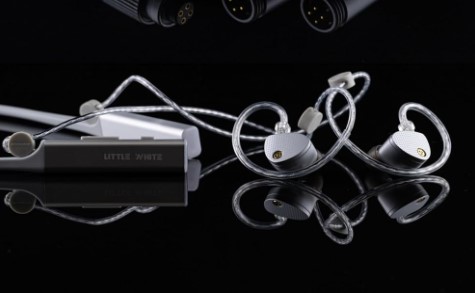
Visually, the Moondrop Aria 2 strips away the flashy gold accents of its predecessor for an understated, mature appearance. The faceplate features a clean, laser-etched dot matrix grid accented by a gold-ringed circular pressure release vent. It looks industrial, functional, and far more premium than its budget heritage suggests.
Performance & Sound Signature
The acoustic profiling tracks closely to Moondrop’s proprietary VDSF (Virtual Diffuse Sound Field) target tuning, delivering a smooth, slightly U-shaped sound character.
Bass: The low-end focuses its energy squarely around the sub-bass frequencies, generating a satisfying, deep rumble when called upon by electronic or hip-hop tracks. The mid-bass is clean and avoids leaking into the lower mid-tones, though it lacks the sharp, snappy speed required for rapid-fire progressive metal drumming.
Midrange: Vocals are positioned neutrally within the spatial mix neither pushed directly into your face nor buried behind instruments. Acoustic guitars sound full-bodied and organic, although a small dip in the lower-mids can occasionally make deep baritone voices sound just a touch leaner than normal.
Treble: Smooth, non-fatiguing, and relaxed. There are no peaky, piercing frequencies to trigger inner ear fatigue during long sessions. The downside is a loss of extreme top-end airiness, meaning subtle recording nuances can occasionally feel masked.
Check Availability & Pricing—>
Build Quality & Comfort
The high-precision zinc housings feel dense and incredibly robust. Despite the added physical weight over plastic monitors, the ergonomic contours sit comfortably against the ear concha without causing sore pressure points.
Original Testing Insight: During prolonged, multi-hour listening sessions in hot weather conditions, the brass nozzles act as a minor heat sink. Condensation can subtly build up inside the tiny internal acoustics filter plate, temporarily diminishing the high-frequency response. Letting the monitors sit out in the open for a few minutes completely restores the native sound balance.
Comparison Section
To give you a clear look at the landscape, let’s stack the Moondrop Aria 2 against its two biggest value competitors: the Truthear HEXA and the Simgot EA500LM.
| Metric / Feature | Moondrop Aria 2 | Truthear HEXA | Simgot EA500LM |
| Driver Setup | 1 Dynamic Driver | 1 Dynamic + 3 Balanced Armatures | 1 Lithium-Magnesium Dynamic |
| Sound Profile | Balanced, Smooth U-Shape | Flat, Clinical Neutral | Bright, V-Shaped, Energetic |
| Shell Material | Zinc-Alloy Metal | 3D-Printed Resin / Matt Faceplate | Mirror-Polished Alloy Metal |
| Cable Quality | Modular (3.5mm + 4.4mm) | Standard 3.5mm (Thin Plastic) | Standard 3.5mm (Braided) |
| Detail Resolution | Average / Natural | High / Analytical | High / Aggressive |
| Bass Impact | Moderate Rumble | Tight, Lean, Soft | Hard-Hitting, Punchy |
Performance Takeaway
Choose the Truthear HEXA if you mix audio or prefer a totally uncolored, highly analytical sound signature. Pick the Simgot EA500LM if you favor electric guitars, pop music, and massive treble energy. Stick with the Moondrop Aria 2 if you want the best all-around comfort, a massive soundstage, and a premium modular cable right out of the box.
Pricing & Value Analysis
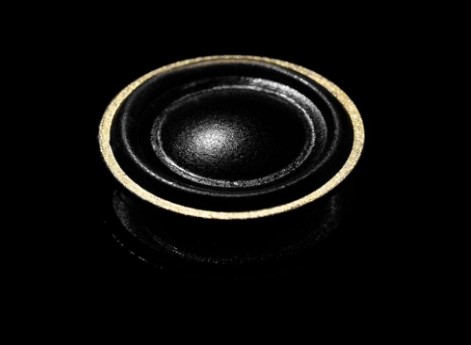
The Moondrop Aria 2 sits firmly in the $80 to $90 price bracket, representing a minor $10 premium over the launch price of the original model. When you factor in that a high-quality third-party modular cable by itself frequently costs $20 to $30, the inclusion of the swappable 3.5mm and 4.4mm plugs makes this package an exceptional bargain. It handles a diverse assortment of genres with ease, making it a stellar entry point for anyone looking to step up from rock-bottom entry-tier monitors.
Buyer Intent Classifications
Who Should Buy This Product
The Diverse-Genre Listener: If your playlists bounce around between acoustic indie, pop, classic rock, and podcasts, the safe and balanced tuning fits like a glove.
The Comfort Seeker: Anyone who works long desk shifts and needs a non-fatiguing sound signature paired with smooth, ergonomic physical shells.
Balanced Source Users: Audiophiles who already own a high-quality 4.4mm balanced audio source device and want to avoid paying extra for an aftermarket cable conversion kit.
Who Should Avoid This Product
Analytical Detail Chasers: Musicians looking to isolate micro-flaws or hyper-revealing instrument tracking in complex studio audio production.
Extreme Bass-Heads: Listeners who want massive, punchy mid-bass impact that physically vibrates the ear canal.
Best & Worst Use Cases
Best Use Case: Casual open-world gaming and movie watching. The expansive, wide soundstage layout excels at creating a deeply immersive sense of distance and atmosphere.
Worst Use Case: High-intensity workouts or outdoor gym sessions. The heavy zinc-alloy housings can slide loose under rapid head movements, and sweat can easily block the fine nozzle filter meshes.
My Final Thoughts
The Moondrop Aria 2 isn’t a revolutionary acoustic breakthrough, but it is an incredibly smart, highly polished evolution. By listening to community feedback, Moondrop systematically fixed the durability shortfalls of the original model while bundling in accessories that set a new benchmark for what budget buyers should expect for their money.
FAQ
Q: Do I need a powerful external amplifier to drive the Moondrop Aria 2?
A: No. With an impedance rating of 32 Ohms and a sensitivity score of 108 dB, the Aria 2 runs perfectly fine directly out of a basic smartphone headphone adapter or laptop jack.
Q: How do you change the modular cable tips on the plug?
A: The base of the cable plug uses a reliable screw-threaded design. You simply unscrew the outer metal sleeve shield, pull out the terminal straight along the alignment notch pins, push in the alternate plug, and tighten the sleeve back down.
Q: Does the Aria 2 come with a built-in microphone for phone calls?
A: No, the stock modular audiophile cable included in the retail box does not feature an inline remote controller or integrated microphone system.
Final Recommendation / Verdict
If you are looking for an all-metal, incredibly durable, and balanced earphone that comes with a masterclass selection of starter accessories under $100, buy the Moondrop Aria 2. It provides a smooth, incredibly wide-sounding, and deeply satisfying listening experience that effortlessly bridges the gap between casual consumer audio and true high-fidelity sound.