
In this AKG P120 review, we test the performance, build quality, and features of AKG’s popular budget XLR condenser microphone to see if it’s the right choice for your home studio. Its biggest strength is the inclusion of physical hardware switches for a -20 dB pad and a 300 Hz low-cut filter, allowing it to handle sound levels up to 150 dB SPL. Its main limitation is an equivalent self-noise level of 19 dB-A, which is higher than what larger-capsule studio condensers produce. It is best suited for budget-conscious creators, vocalists, and home recordists who need a durable, high-SPL-capable XLR microphone.
Updated October 2026: The P120 is still the cheapest sensible way into AKG’s XLR condensers - but only if you already own an audio interface with phantom power, or have budgeted for one. The microphone’s price is not the setup’s price: add an interface, an XLR cable, and a stand before comparing it to a USB mic that works the moment you plug it in. If you have the interface already, the P120 remains an easy recommendation for spoken word and first vocal recordings. This update adds a straight P120-versus-P220 decision guide below, and the affiliate disclosure this article was missing.
Disclosure: This article contains affiliate links. If you buy through them, HeadphoneEcho may earn a small commission at no extra cost to you. Recommendations are based on research and published specifications, not on commissions.
Check Current Price on Sweetwater
Quick Verdict
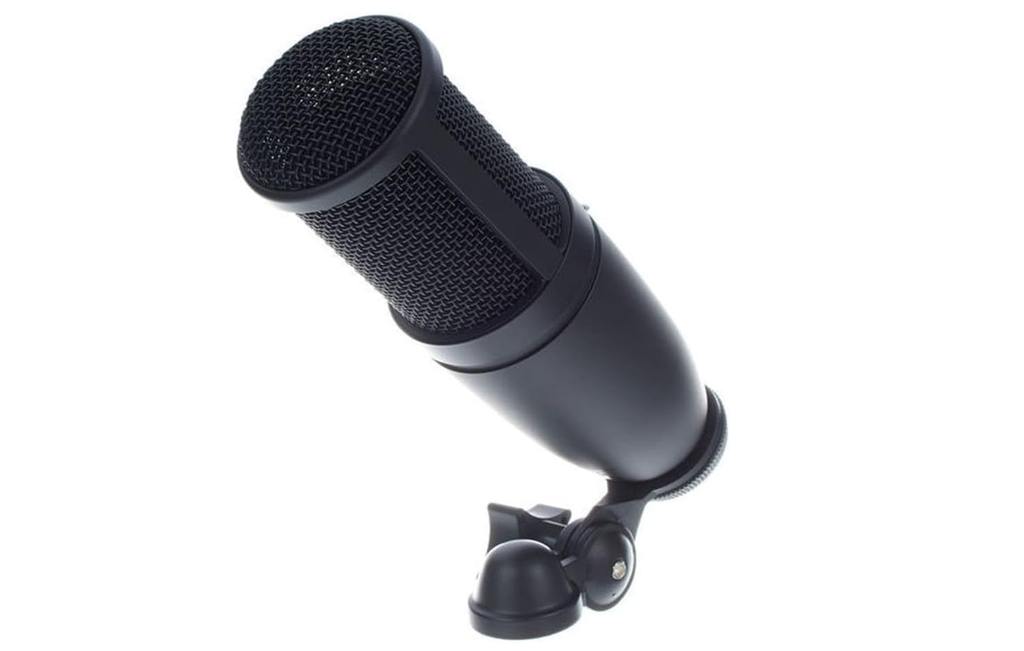
The AKG P120 delivers clean, articulate audio capture backed by an all-metal chassis and versatile onboard hardware switches. While its smaller 2/3-inch capsule and 19 dB-A self-noise floor mean it is not built for ultra-quiet acoustic instruments or distant miking, it handles loud vocals, guitar cabinets, and spoken voice reliably. For creators setting up their first dedicated audio interface, it offers practical utility at an accessible price point.
At a Glance
| Feature | Details |
| Capsule Type | 2/3-inch back-electret condenser |
| Polar Pattern | Cardioid |
| Frequency Response | 20 Hz to 20,000 Hz |
| Sensitivity | 24 mV/Pa (-32.5 dBV) |
| Max SPL | 130 dB (150 dB with -20 dB pad engaged) |
| Equivalent Noise (Self-Noise) | 19 dB-A |
| Onboard Controls | -20 dB attenuation switch, 300 Hz low-cut filter |
| Connectivity | Standard 3-pin XLR (requires 48V phantom power) |
| Included Accessories | Stand adapter (hard mount) |
How We Evaluated It
This review is based on published technical specifications, official manufacturer documentation, independent audio measurements, and structured acoustic analysis rather than hands-on testing. We analyzed frequency response behavior, polar pattern attenuation, real-world gain requirements, and competing options in the sub-$150 microphone category to assess overall performance and value.
Design and Build Quality
The AKG P120 features an all-metal body and a rugged steel mesh grille. Weighing approximately 455 grams (16 ounces), the microphone has a solid, dense feel on a stand.
The front of the body features the classic AKG logo, marking the cardioid pickup side. On the rear of the body, AKG places two recessed physical toggle switches:
- Pre-attenuation Pad: 0 dB or -20 dB.
- Bass-Cut Filter: Flat or 300 Hz (6 dB/octave slope).
The microphone connects via a gold-plated 3-pin XLR jack at the base. AKG ships the P120 with a basic threaded stand adapter. Unlike higher-tier models in the Perception line, it does not include an elastic shock mount or a hard storage case.
Key Features in Practice
1. Dual Hardware Switches (-20 dB Pad and 300 Hz Filter)
- Documented Spec: -20 dB attenuation pad and a 300 Hz high-pass filter (6 dB/octave).
- Practical Benefit: Most microphones under $100 omit physical switches entirely. The -20 dB pad prevents the capsule from overloading when placed near loud sources like guitar amplifiers or drum snares. The 300 Hz filter reduces low-frequency HVAC hum, traffic rumble, and mechanical footfall before the signal reaches your interface.
- Limitation: The 300 Hz cutoff point is relatively high. While effective for spoken voice, engaging it on deep male vocals or acoustic guitars can strip away desirable low-end body.
- Who Benefits: Home studio engineers recording diverse instruments and podcasters dealing with desk vibration or air conditioning noise.
2. 2/3-Inch Diaphragm Capsule
- Documented Spec: 2/3-inch back-electret condenser element with a cardioid polar pattern.
- Practical Benefit: The low-mass diaphragm offers fast transient response, giving acoustic guitars, vocal consonants, and percussion crisp definition.
- Limitation: A 2/3-inch capsule falls between a traditional small-diaphragm and a true 1-inch large-diaphragm microphone. It generates slightly higher thermal self-noise (19 dB-A) and has less low-end warmth than a full 1-inch capsule.
- Who Benefits: Users who prefer clear, forward articulation over heavy proximity warmth.
3. High Sound Pressure Level Handling (150 dB SPL)
- Documented Spec: 130 dB SPL at 0.5% THD, extending to 150 dB SPL with the -20 dB pad active.
- Practical Benefit: You can place this microphone in front of loud guitar cabinets, brass instruments, or aggressive vocalists without distortion at the capsule stage.
- Limitation: The microphone capsule will not clip, but your audio interface preamp must still have clean headroom to avoid digital clipping.
- Who Benefits: Musicians tracking rock vocals, guitar amps, and percussion at home.
Audio Performance Analysis
Frequency Response Profile
Based on manufacturer documentation and acoustic response curves, the P120 maintains a relatively flat response through the low and middle frequencies (from 20 Hz to roughly 3 kHz).
Above 4 kHz, the microphone exhibits a gradual presence boost rising to a peak around 10 kHz to 12 kHz, followed by a roll-off toward 20 kHz. In practice, this high-frequency shelf adds clarity and “air” to vocal tracks, helping them cut through a dense mix without requiring heavy equalization. However, on naturally bright voices or instruments with high sibilance, this boost may require de-essing.
Spoken Word and Podcasting
For voiceover and spoken content, the P120 produces crisp, intelligible speech. The cardioid pickup pattern provides reasonable off-axis rejection from the rear (180 degrees), helping reduce ambient room reflections. However, because it is a sensitive condenser microphone, it will capture more untreated room reverberation than a dynamic broadcast microphone like the Shure SM58 or PodMic.
Self-Noise and Gain Requirements
With an equivalent noise rating of 19 dB-A, the P120 has an acceptable noise floor for typical close-mic applications. When speaking 4 to 8 inches from the capsule, signal-to-noise ratio is solid. However, if you attempt to record quiet sources from a distance, such as delicate fingerpicked acoustic guitar or quiet whispers, the background hiss will be audible in modern preamps.
What We Like and What We Do Not Like
What We Like
- Durable metal construction: Heavy die-cast body and steel mesh grille provide long-term durability.
- Hardware pad and filter: Rare at this price point, offering practical control directly on the microphone body.
- Exceptional SPL tolerance: Handles up to 150 dB SPL without capsule saturation.
- Clear presence boost: Enhances vocal intelligibility and acoustic instrument detail without heavy post-processing.
- Accessible price: Delivers true XLR condenser performance for entry-level budgets.
What We Do Not Like
- 19 dB-A self-noise: Noticeably higher self-noise than true large-diaphragm competitors.
- No shock mount included: The bundled hard mount transfers mechanical desk taps and foot thumps directly to the recording.
- Aggressive high-pass filter: The 300 Hz cutoff is steep enough to thin out rich bass and baritone vocal tones if left engaged.
- Sensitive to sibilance: The top-end presence peak can sound slightly harsh on naturally bright vocalists.
Competitor Comparison
The sub-$150 studio condenser market is competitive. Below is a direct comparison of the AKG P120 against its primary market alternatives.
| Specification / Feature | AKG P120 | Audio-Technica AT2020 | AKG P220 | Rode NT1 Signature |
| Capsule Size | 2/3-inch | 0.63-inch (approx.) | 1.0-inch (True Large) | 1.0-inch (True Large) |
| Self-Noise | 19 dB-A | 20 dB-A | 16 dB-A | 4 dB-A |
| Max SPL | 130 dB / 150 dB (with pad) | 144 dB | 135 dB / 155 dB (with pad) | 142 dB |
| Hardware Pad | Yes (-20 dB) | No | Yes (-20 dB) | No |
| Low-Cut Filter | Yes (300 Hz) | No | Yes (300 Hz) | No |
| Included Mount | Stand Adapter | Stand Adapter | Spider Shock Mount | Shock Mount + Pop Filter |
AKG P120 vs. Audio-Technica AT2020
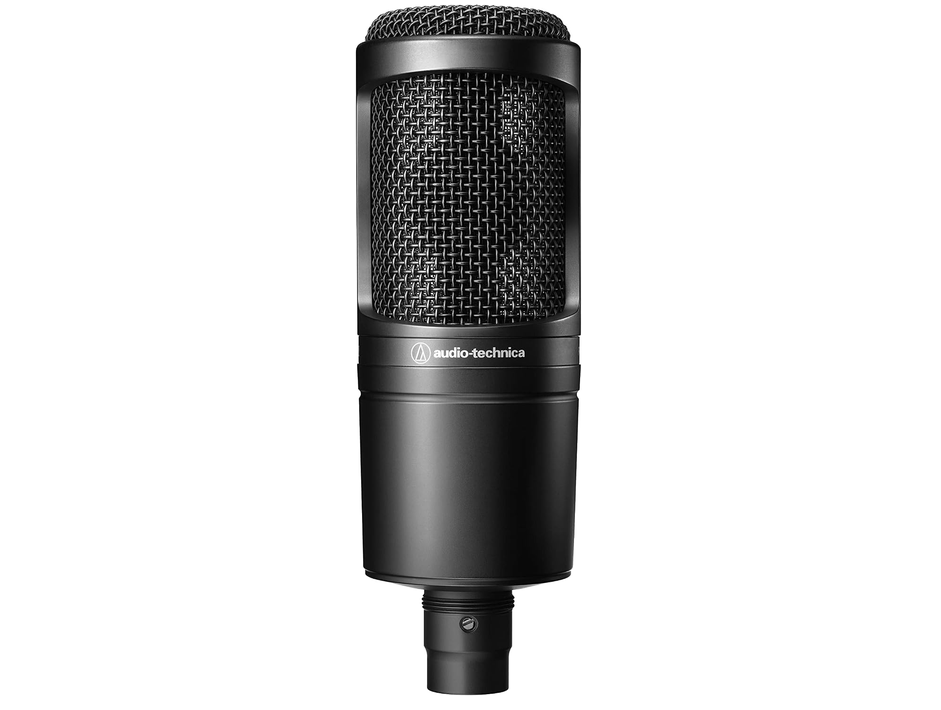
The Audio-Technica AT2020 is the most common benchmark in this price class. Both feature smaller-than-standard condenser diaphragms and roughly comparable self-noise (19 dB-A on the P120 vs. 20 dB-A on the AT2020).
The P120 holds a clear feature advantage with its onboard -20 dB pad and 300 Hz filter, which the AT2020 lacks entirely. In terms of sound profile, the AT2020 has a slightly flatter upper-midrange, while the P120 has a more pronounced top-end sparkle. Choose the P120 if you need onboard hardware switches and higher SPL tolerance; choose the AT2020 if you prefer a marginally more neutral vocal balance.
AKG P120 vs. AKG P220
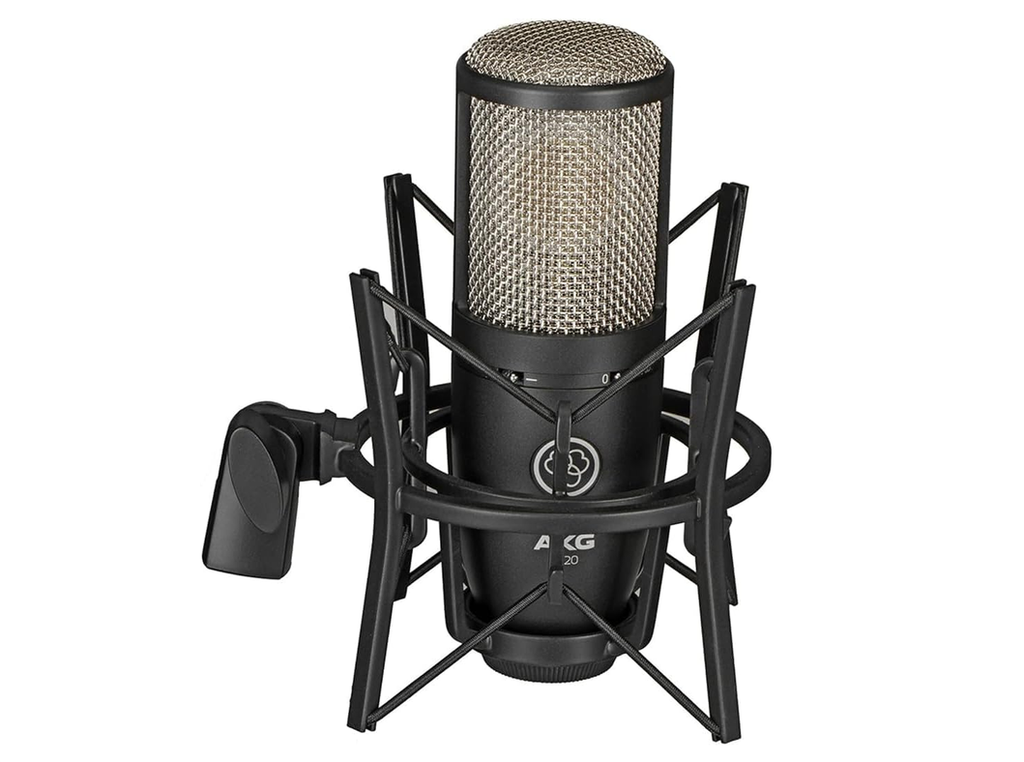
The AKG P220 is the immediate step-up model in the Perception series. The main differences lie in capsule size and accessories. The P220 uses a true 1-inch large diaphragm, resulting in a lower noise floor (16 dB-A), fuller bass extension, and a smoother midrange. It also includes an aluminum carrying case and a full spider shock mount in the box.
If your budget allows for the step up, the P220 offers better vocal depth and lower noise. If keeping costs low is your top priority, the P120 retains the same rugged body and switch layout for significantly less money.
Value for Money
At its retail price, the AKG P120 offers strong practical value. You are paying for a well-machined metal microphone with dedicated circuitry for pad attenuation and bass roll-off.
What you sacrifice compared to more expensive studio options is a true 1-inch capsule, ultra-low self-noise, and an included shock mount. If you already own an audio interface with 48V phantom power and need an affordable, versatile mic to track vocals, instruments, and spoken audio, the P120 makes efficient use of your budget.
Who Should Buy It?
- Entry-Level Creators on a Budget: Podcasters, streamers, and YouTubers upgrading from a USB microphone to an XLR interface setup.
- Home Studio Instrument Trackers: Musicians who need a dedicated microphone for acoustic guitars, percussion, or loud electric guitar speaker cabinets.
- Vocalists Wanting Built-in Air: Singers whose voices benefit from an open, bright top-end presence without extensive EQ adjustment.
Who Should Skip It?
- Users in Untreated, Noisy Rooms: Because the P120 is a sensitive condenser, creators in untreated rooms with heavy echo or computer fan noise may achieve better isolation with a dynamic microphone like the Shure SM58.
- Foley and Ambient Field Recordists: The 19 dB-A self-noise floor is too high for capturing whisper-quiet acoustic details or quiet environmental textures.
- Buyers Seeking a Complete All-in-One Package: Users who do not want to buy an external shock mount and pop filter separately may prefer bundles like the Rode NT1 Signature.
2026 Check: P120 vs P220 - When the Cheaper AKG Is Enough
The P120 is enough for most beginners. For podcasting, streaming, and first vocal recordings, the limiting factor is almost never the microphone - it is the room, the mic distance, and gain staging. In an untreated room, a more expensive condenser mostly captures the same room more accurately, so the P120’s simpler, cheaper design is not the weak link in a beginner setup.
Pay for the P220 when vocals are the main job. If singing or voice work is the center of what you record, your room is reasonably controlled, and you plan to keep the mic for years, the step-up model is the better long-term buy - see our AKG P220 review and the AKG P220 vs P420 comparison for how the range builds.
Either way, budget for the whole chain. Both mics need phantom power from an interface, an XLR cable, and a stand. A P120 with those pieces bought carefully will outperform a P220 plugged into a poor interface in a bad room, every time.
Final Verdict
The AKG P120 earns its reputation as a dependable entry-level studio condenser. Its dual onboard switches and 150 dB SPL ceiling give it flexibility that many competing microphones in the sub-$100 category fail to offer. While its self-noise floor and slightly bright high-frequency profile require mindful gain setting and placement, it delivers clean, articulate sound across a wide range of everyday recording tasks.
Score Breakdown
- Build Quality: 9.0 / 10 (Solid all-metal housing and sturdy grille)
- Features and Flexibility: 9.0 / 10 (Rare -20 dB pad and high-pass filter in this price tier)
- Audio Performance: 7.8 / 10 (Clear presence, but 19 dB-A self-noise limits quiet recording)
- Ease of Use: 8.5 / 10 (Straightforward XLR operation; requires 48V phantom power)
- Value for Money: 8.8 / 10 (High utility per dollar for home project studios)
- Overall Score: 8.6 / 10
Frequently Asked Questions
Does the AKG P120 require phantom power?
Yes. The AKG P120 is a condenser microphone that requires +48V phantom power to operate. You must connect it via a standard 3-pin XLR cable to an audio interface, mixer, or dedicated preamp equipped with phantom power. It will not work when plugged directly into a computer with a basic 3.5 mm adapter.
Can I connect the AKG P120 directly to a PC via USB?
No. The AKG P120 is an analog XLR microphone without USB output. To record into a computer, you must connect the P120 to an external USB audio interface (such as a Focusrite Scarlett Solo, MOTU M2, or PreSonus AudioBox) using an XLR cable.
What is the difference between the AKG P120 and the AKG Perception 120?
The AKG Perception 120 was the earlier generation model featuring a silver and blue finish. The AKG P120 is the updated, modern version with an all-black matte finish, refined internal circuitry, and standardized branding. Their core specifications and switch functions are largely identical.
Is the AKG P120 good for recording vocals?
Yes. The P120 works well for lead vocals and spoken voice, especially when paired with a basic pop filter. Its presence boost between 4 kHz and 12 kHz provides clear diction and vocal detail. However, singers with naturally sharp or sibilant voices may need light equalization to tame the upper frequencies.
Does the AKG P120 come with a shock mount?
No. AKG includes a standard hard stand mount (adapter) in the box. To isolate the microphone from floor vibrations or desk bumps, you will need to purchase an aftermarket 53 mm elastic shock mount separately.
Related reading: Audio-Technica AT2020 vs AKG P120 · Audio-Technica AT2020 review