
Audio-Technica AT2040USB is an end-address dynamic USB microphone engineered specifically for vocal clarity and environmental noise rejection. Its standout advantage is a tight hypercardioid polar pattern that isolates your voice from room reflections and background noise without relying on aggressive digital noise suppression. Its primary limitation is the lack of an analog XLR output, which means you cannot transition the microphone to a traditional audio interface later on. For solo podcasters, voiceover artists, and streamers working in acoustically untreated rooms, it provides a clean, broadcast-style vocal capture in a reliable plug-and-play format.
Updated October 2026: The AT2040USB solves a specific problem: a streamer or podcaster in a noisy, untreated room who wants a microphone that works the moment it is plugged in. Its dynamic capsule and hypercardioid pattern reject far more room than a condenser at this price, and there is no interface to buy. The trade is the same as every USB mic: there is no XLR path later. This update adds the disclosure this article was missing, plus the room-first verdict below.
Disclosure: This article contains affiliate links. If you buy through them, HeadphoneEcho may earn a small commission at no extra cost to you. Recommendations are based on research and published specifications, not on commissions.
Check Audio-Technica AT2040USB Price
Key Specifications
| Specification | Details |
| Transducer Type | Dynamic |
| Polar Pattern | Hypercardioid |
| Frequency Response | 80 Hz to 16,000 Hz |
| Analog-to-Digital Conversion | 16-bit / 24-bit |
| Sampling Rates | 44.1 kHz, 48 kHz, 88.2 kHz, 96 kHz |
| High-Pass Filter | 80 Hz, 18 dB/octave (switchable) |
| Output Connector | USB Type-C (USB 2.0 compliant) |
| Headphone Output | 3.5 mm (1/8″) stereo jack, 77 mW at 32 ohms |
| Onboard Controls | Capacitive mute button, headphone volume dial, monitor mix dial, low-cut switch |
| Body Construction | All-metal chassis with internal shock mount |
| Weight | Approximately 600 g (21 oz) |
| Dimensions | 145.3 mm length, 52.0 mm body diameter |
| Included Accessories | AT8487 mounting clamp, 5/8″-27 to 3/8″-16 threaded adapter, 2.0 m USB-C to USB-A cable, USB-A to USB-C adapter |
Who Should Buy It?
- Solo Podcasters in Untreated Spaces: Creators recording in bedrooms or standard home offices benefit from the hypercardioid capsule, which rejects wall reflections and ambient household sounds more aggressively than typical cardioid condenser models.
- Live Streamers and Content Creators: Streamers who want hardware-level controls for quick muting, zero-latency vocal monitoring, and custom audio balance without configuring extra background software.
- Voiceover Artists on a Budget: Spoken-word creators seeking the warm low-end and controlled presence characteristic of dynamic broadcast microphones without buying a dedicated mixer or high-gain preamp.
Who Should Skip It?
- Multi-Host Roundtable Creators: The hypercardioid pattern has a narrow pickup corridor at the front, making it impractical for sharing a single microphone between two or more people.
- Musicians and Acoustic Instrument Recorders: The 80 Hz to 16 kHz frequency range is tailored for speech articulation, meaning it lacks the extended high-end air and delicate transient response needed for detailed acoustic instruments.
- Creators Planning Future Studio Hardware Expansions: Because the AT2040USB lacks an analog XLR connection, upgrading your setup to a hardware mixer or multi-channel audio interface requires replacing the microphone entirely.
How We Evaluated It
This review is based on published specifications, manufacturer technical documentation, independent laboratory and acoustic measurements, and specialist technical analysis rather than hands-on testing. We evaluated its capsule design, polar response characteristics, onboard preamplification, control layout, and direct competitor landscape to determine its practical value for buyers.
Design and Build Quality
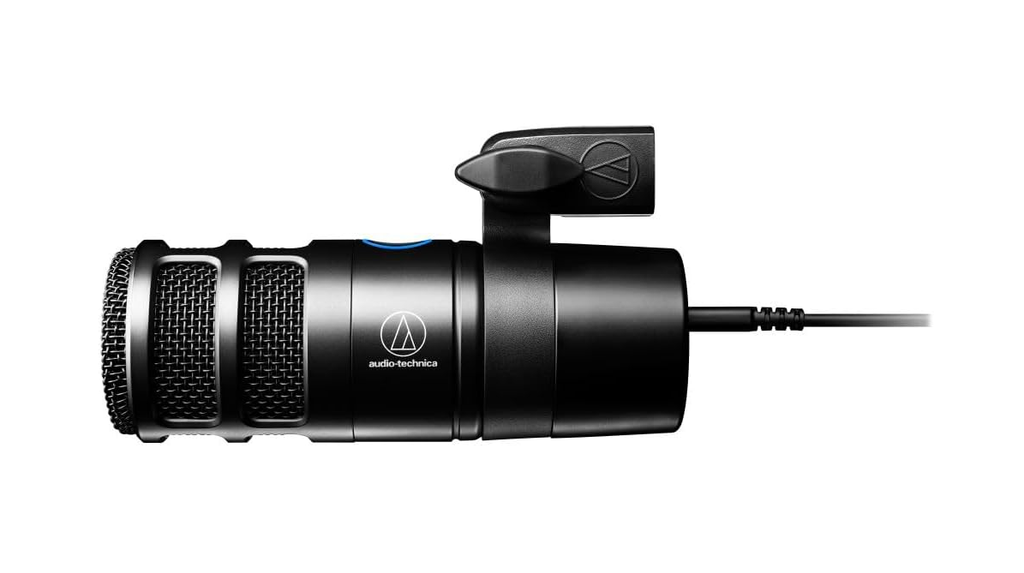
The AT2040USB carries a utilitarian, broadcast-inspired aesthetic with an all-metal black chassis. Weighing approximately 600 grams, it feels substantial and durable, providing effective protection for internal components.
Audio-Technica incorporated internal dampening into the capsule assembly to reduce low-frequency rumble transmitted through mounting arms. The capsule is surrounded by a multistage foam and nonwoven mesh windscreen that manages moderate plosives during close speech.
The packaging includes an AT8487 mounting clamp and a 5/8″-27 to 3/8″-16 threaded adapter. It does not include a desktop stand or boom arm. Buyers will need a sturdy desk mount or boom arm capable of supporting a 600-gram payload.
Setup and Ease of Use
The AT2040USB functions as a class-compliant USB audio device on Windows and macOS. It requires no proprietary drivers, external control software, or companion applications.
Once connected via the included USB-C cable, the internal analog-to-digital converter handles audio processing up to 24-bit resolution and 96 kHz sampling rates. All adjustments - such as monitoring levels, headphone mix, mute toggling, and the high-pass filter - occur directly on the hardware body. This design provides immediate operational reliability across any digital audio workstation, video conferencing platform, or streaming software.
Acoustic Performance and Sound Character
Capsule Profile: Dynamic, End-Address
Polar Pattern: Hypercardioid
Frequency Range: 80 Hz to 16,000 Hz
Vocal Articulation and Frequency Balance
The dynamic capsule is tuned specifically for spoken-word clarity. The low end extends down to 80 Hz, preserving natural chest resonance without letting sub-bass rumble muddy the signal. The midrange remains neutral and intelligible, while a presence lift in the upper-mid frequencies helps speech cut through background game audio or musical beds. The top end gently rolls off above 16 kHz, which prevents sibilance and harsh treble spikes common in entry-level condenser models.
Ambient Noise and Off-Axis Rejection
The hypercardioid polar pattern is significantly narrower than standard cardioid designs. It attenuates sounds arriving from 90 degrees and 270 degrees at the sides, substantially reducing the pickup of mechanical keyboards, computer cooling fans, and room reverberation. However, hypercardioid patterns exhibit a small sensitivity lobe directly behind the microphone. Users should avoid positioning reflective computer monitors or loud sound sources directly behind the base of the mic body.
Key Features in Practice
Switchable 80 Hz High-Pass Filter
Located on the base of the microphone, this mechanical switch engages an 80 Hz filter with an 18 dB per octave slope. In practice, this eliminates desk thumps, footfall vibrations, and low-frequency HVAC hum at the hardware stage, reducing the need for post-production equalization.
Capacitive Touch Mute with Status Indicator Ring
A silent capacitive touch sensor sits on the microphone body, accompanied by a two-state LED ring. The ring illuminates blue when active and red when muted. Because the switch is capacitive, it eliminates mechanical clicking noises in your recording when toggling mute during live broadcasts.
Headphone Monitoring and Hardware Mix Dial
The bottom panel houses a 3.5 mm headphone jack backed by a 77 mW amplifier (at 32 ohms), providing sufficient power for standard studio monitoring headphones. Two thumb dials let you adjust headphone listening volume and smoothly blend direct microphone input with playback audio from your computer for zero-latency monitoring.
What We Like
- Superior Environmental Noise Handling: The hypercardioid pattern and dynamic element isolate voices in untreated rooms effectively.
- Dedicated Hardware Controls: Physical thumb dials for headphone level and mic-to-PC mix blend provide immediate adjustment without navigating software menus.
- Silent Capacitive Mute: Touch-sensitive mute prevents audible mechanical pops and includes a clear blue-or-red visual status ring.
- Hardware High-Pass Filter: Onboard 80 Hz low-cut filter removes low-frequency environmental rumble directly at the converter stage.
- Robust Metal Build: Heavy-duty enclosure and internal capsule shock mount offer high mechanical durability.
What We Don’t Like
- No Desk Stand Included: The package includes only a mounting collar, requiring an additional investment in a desktop stand or boom arm.
- No Analog XLR Output: Unlike several competing dynamic models, there is no XLR connection for future interface upgrades.
- No Companion DSP Software: Creators who want digital compression, noise gates, or parametric equalization must configure those tools in third-party software.
- Narrow Speaking Sweet Spot: The directional pattern requires the speaker to stay consistently positioned in front of the top grille to avoid volume drops.
Competitor Comparison
| Model | Transducer | Polar Pattern | Connectivity | Max Resolution | Onboard Controls |
| Audio-Technica AT2040USB | Dynamic | Hypercardioid | USB-C | 24-bit / 96 kHz | Mute, Vol, Mix, Low-cut |
| Shure MV7+ | Dynamic | Cardioid | USB-C and XLR | 24-bit / 48 kHz | Touch strip, DSP App |
| Rode PodMic USB | Dynamic | Cardioid | USB-C and XLR | 24-bit / 48 kHz | Vol dial, Onboard DSP |
| Audio-Technica ATR2100x-USB | Dynamic | Cardioid | USB-C and XLR | 24-bit / 192 kHz | Mute switch, Vol dial |
Audio-Technica AT2040USB vs. Shure MV7+
The Shure MV7+ offers hybrid USB and XLR connections, an onboard DSP engine (compression, limiter, digital pop filter), and customizable RGB lighting via companion software. However, the MV7+ is significantly more expensive. The AT2040USB provides a narrower hypercardioid pattern for tighter side-noise rejection and offers full hardware mix control without needing proprietary software.
Audio-Technica AT2040USB vs. Rode PodMic USB
The Rode PodMic USB includes built-in Aphex DSP processing and both USB-C and XLR outputs. It is a heavier unit that delivers a bright, articulate broadcast tone. The AT2040USB stands out by offering a dedicated physical monitor mix dial and a hypercardioid pattern, whereas the PodMic USB relies on a standard cardioid pattern and software-based mix adjustments.
Audio-Technica AT2040USB vs. Audio-Technica ATR2100x-USB
The ATR2100x-USB is an entry-level handheld dynamic microphone with dual USB/XLR outputs. While budget-friendly and versatile, it features a lighter chassis, higher handling noise sensitivity, and a basic cardioid pattern. The AT2040USB provides superior broadcast vocal presence, an integrated shock mount, a hypercardioid capsule, and direct monitor blending.
Compare Audio-Technica AT2040USB Options
Value for Money
At its typical price point of approximately $149 (around £129), the Audio-Technica AT2040USB occupies an intermediate tier between budget handheld USB dynamic mics and premium hybrid broadcast units.
What you pay for is professional-grade acoustic rejection, reliable 24-bit/96 kHz conversion, and dedicated physical controls that streamline the recording workflow. What you sacrifice is future analog expandability (no XLR) and bundled desktop mounting hardware. For creators who need clean vocal capture in imperfect recording spaces and want a zero-software workflow, the return on investment is strong.
2026 Check: For Noisy Rooms First, Upgrade Paths Second
Buy it for the room you have, not the studio you imagine. If your recording space has a fan, a keyboard, street noise, or echo, the AT2040USB’s dynamic design and tight hypercardioid pickup will do more for your recordings than a more detailed condenser that hears all of it. The article’s own noise-rejection section above is the reason to buy this mic - everything else about it is secondary.
Use the controls it actually gives you. The touch mute, the headphone mix dial, and the 80 Hz high-pass filter are not decorations: mute between takes instead of editing silence later, blend your own voice against game or call audio without software, and cut low rumble at the source rather than fixing it in post. Buyers who ignore these three controls get half the microphone they paid for.
Accept the USB ceiling honestly. Like the Blue Yeti, this mic cannot grow into an XLR chain - if you already plan an interface-based setup within a year, an XLR dynamic is the better starting point, and our AT2020 review shows what the condenser side of that chain looks like. If you will stay USB, the ceiling does not matter - and the AT2040USB’s room rejection is exactly why it beats most USB condensers for streaming.
Final Verdict
The Audio-Technica AT2040USB is a focused, well-engineered microphone that addresses the most common acoustic challenge in home recording: background noise. By pairing a broadcast dynamic capsule with a tight hypercardioid pattern and switchable high-pass filtering, it delivers clean, isolated vocal tracks without requiring studio treatment or complex software chains. While buyers must factor in the cost of a desk stand or boom arm and accept the absence of an XLR port, its core performance for solo spoken-word applications is dependable and practical.
Score Breakdown
- Sound Quality and Noise Rejection: 8.8 / 10
- Build Quality and Durability: 9.0 / 10
- Features and Onboard Controls: 8.5 / 10
- Ease of Use and Setup: 9.2 / 10
- Value for Money: 8.6 / 10
- Overall Score: 8.8 / 10
Frequently Asked Questions
Does the Audio-Technica AT2040USB require an audio interface?
No. The AT2040USB contains its own internal preamplifier and 24-bit/96 kHz analog-to-digital converter. It connects directly to your computer using the included USB cable and does not require an external audio interface, mixer, or phantom power.
Does the AT2040USB have an XLR connection?
No. The AT2040USB is exclusively a USB-C microphone. If you need an analog XLR connection for an audio interface, Audio-Technica sells the standard AT2040, which is an XLR-only dynamic microphone.
Can I use the AT2040USB on a standard desktop?
Yes, but you will need to purchase a desktop base, tripod, or boom arm. The microphone includes a mounting clamp with standard 5/8″-27 and 3/8″-16 threading, but it does not come with a tabletop stand in the box.
How does the hypercardioid pattern help in noisy rooms?
A hypercardioid pattern has narrower sensitivity at the front and significantly greater attenuation at the sides (90 and 270 degrees) compared to standard cardioid patterns. This means room echo, keyboard clicks, and computer fan hum coming from the sides are picked up at substantially lower volumes.
Does the microphone require software to control mute or headphone mix?
No. All key controls, including the capacitive mute button, headphone volume dial, mic-to-PC mix wheel, and 80 Hz high-pass filter switch, operate entirely on the microphone hardware.
Can I use the AT2040USB with an iPad or smartphone?
Yes, provided your mobile device supports USB audio input and supplies adequate bus power via USB-C or an appropriate camera connection adapter.
Related reading: Shure MV6 vs Elgato Wave 3